Structured Math.
Real Measurement.
Hands-On Learning.
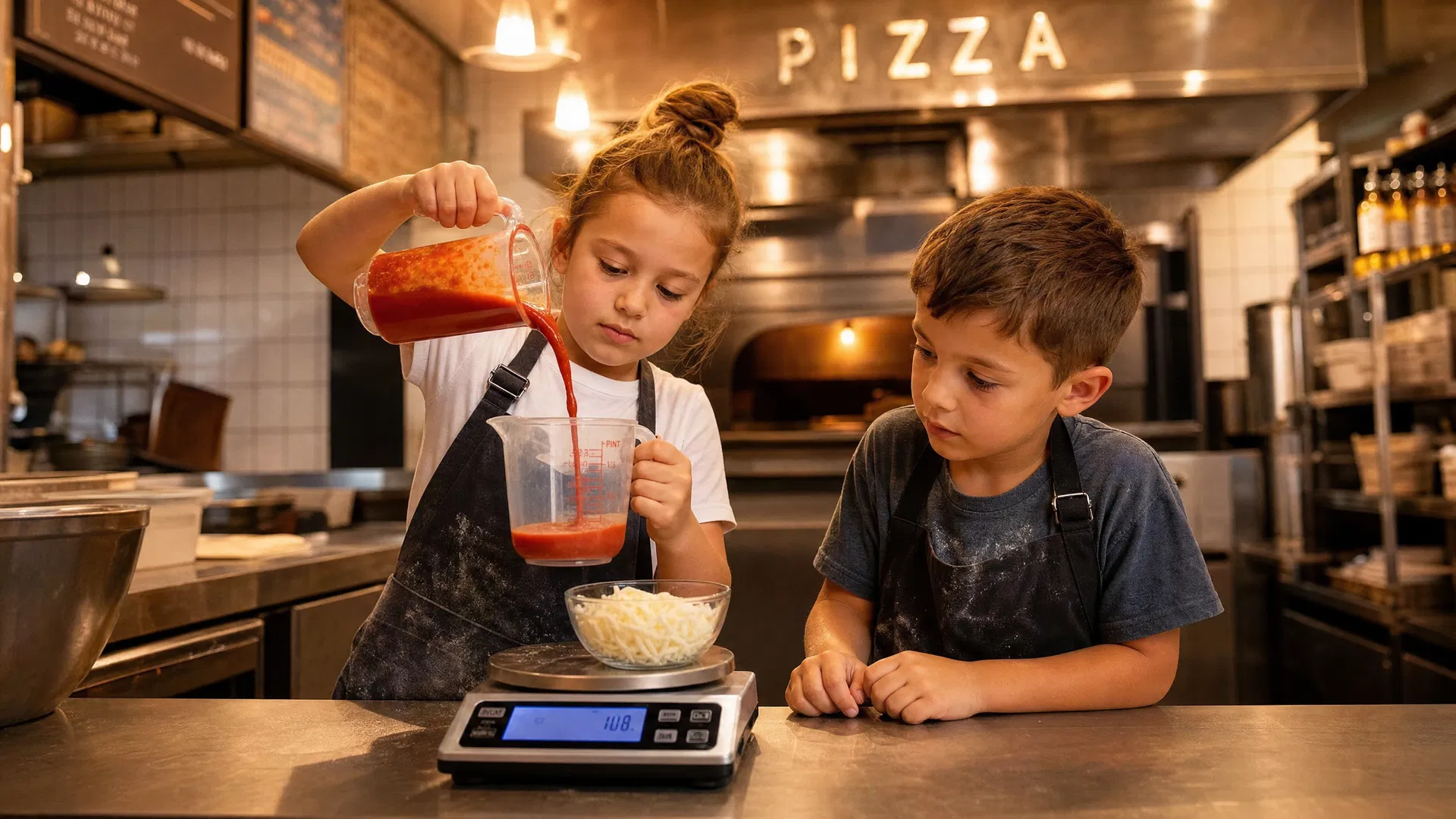
A structured, instructor-led K–2 math and science class held in our restaurant kitchen. Students count, measure sauce and cheese, model fractions, and observe physical change — using real pizza-making tools as hands-on manipulatives.
A Math & Science Lab Using Pizza as the Manipulative
The Ruckus K–2 Pizza Math & Measurement Lab is a structured, instructor-led supplemental teaching session for children in Kindergarten through Grade 2. The class is held in our restaurant kitchen, where students use real pizza-making materials — sauce, cheese, dough, toppings, measuring cups, and a digital scale — as hands-on tools for learning math and science.
This unique lab connects abstract mathematical concepts to tangible, real-world experiences, fostering critical thinking and problem-solving skills. Each 60-minute session is carefully structured and led by an experienced instructor, ensuring focused academic engagement throughout the entire pizza-making process.
Students leave with completed academic work and documented evidence of learning — a completed worksheet, an assessed exit ticket, and instructor-recorded progress toward NC math and science standards. Any optional food service is entirely separate from the instructional session and is not part of the billed academic service.
Five Academic Skills in Every Session
Each skill is tied to North Carolina K–2 math and science standards and assessed through the student worksheet, exit ticket, and instructor checklist.
Counting & Comparison
Students will count 8–12 toppings with one-to-one correspondence and compare two groups using more, fewer, and equal.
Students place and count toppings, record totals, and compare groups — building foundational number sense and one-to-one correspondence through a concrete, hands-on activity.
Measuring by Volume
Students will measure sauce using ¼ cup and ½ cup measuring cups and identify which amount is greater.
Students measure sauce using standard measuring cups, compare the amounts, and record their findings — connecting standard units of measurement to a real-world task.
Comparing Weight
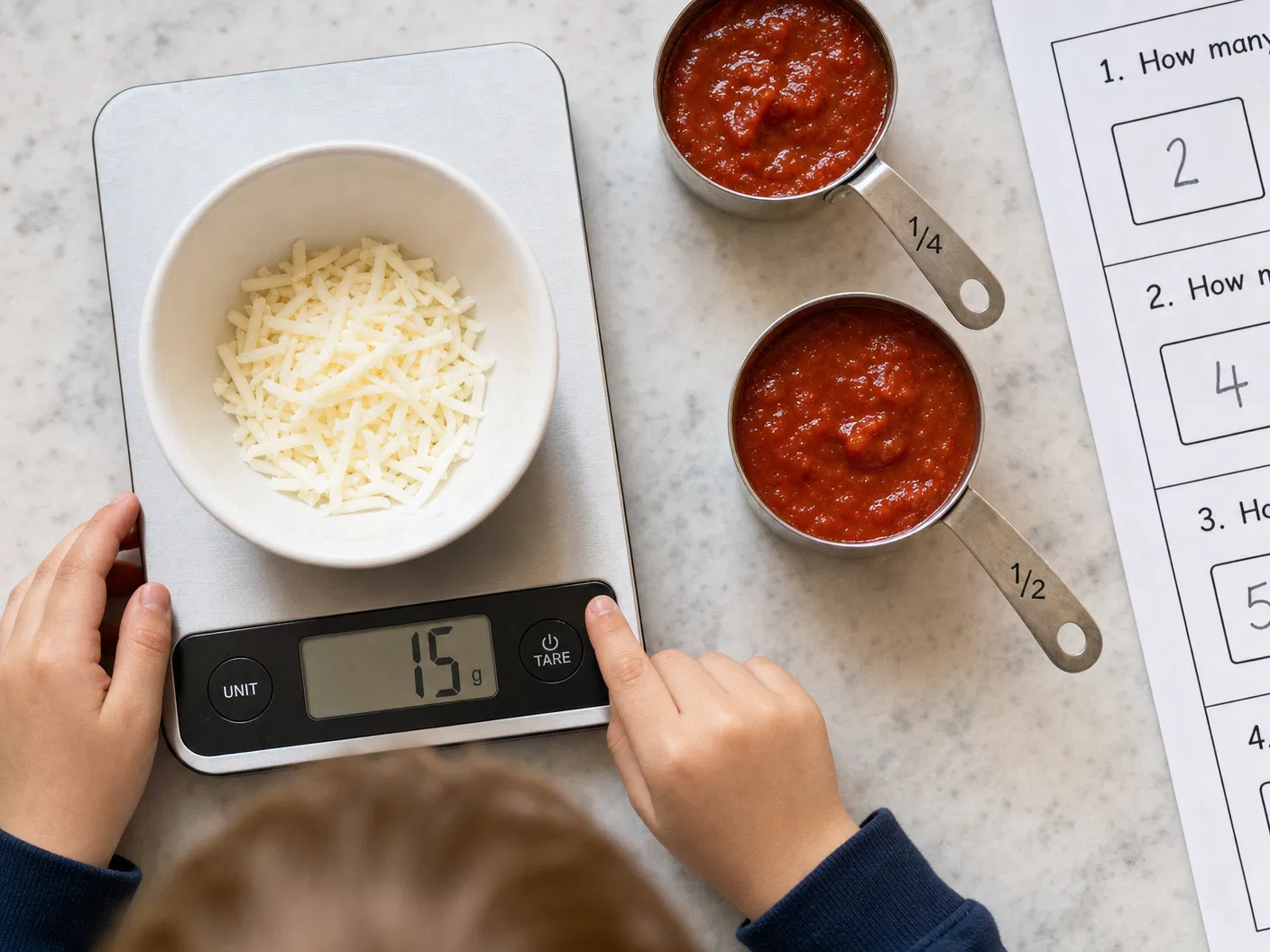
Students will read a digital gram scale display and identify which of two cheese portions is heavier.
Students weigh two portions of cheese on a digital gram scale, read the display for each, and circle the heavier portion — building understanding of measurable attributes without requiring calculation.
Fractions: Halves & Quarters
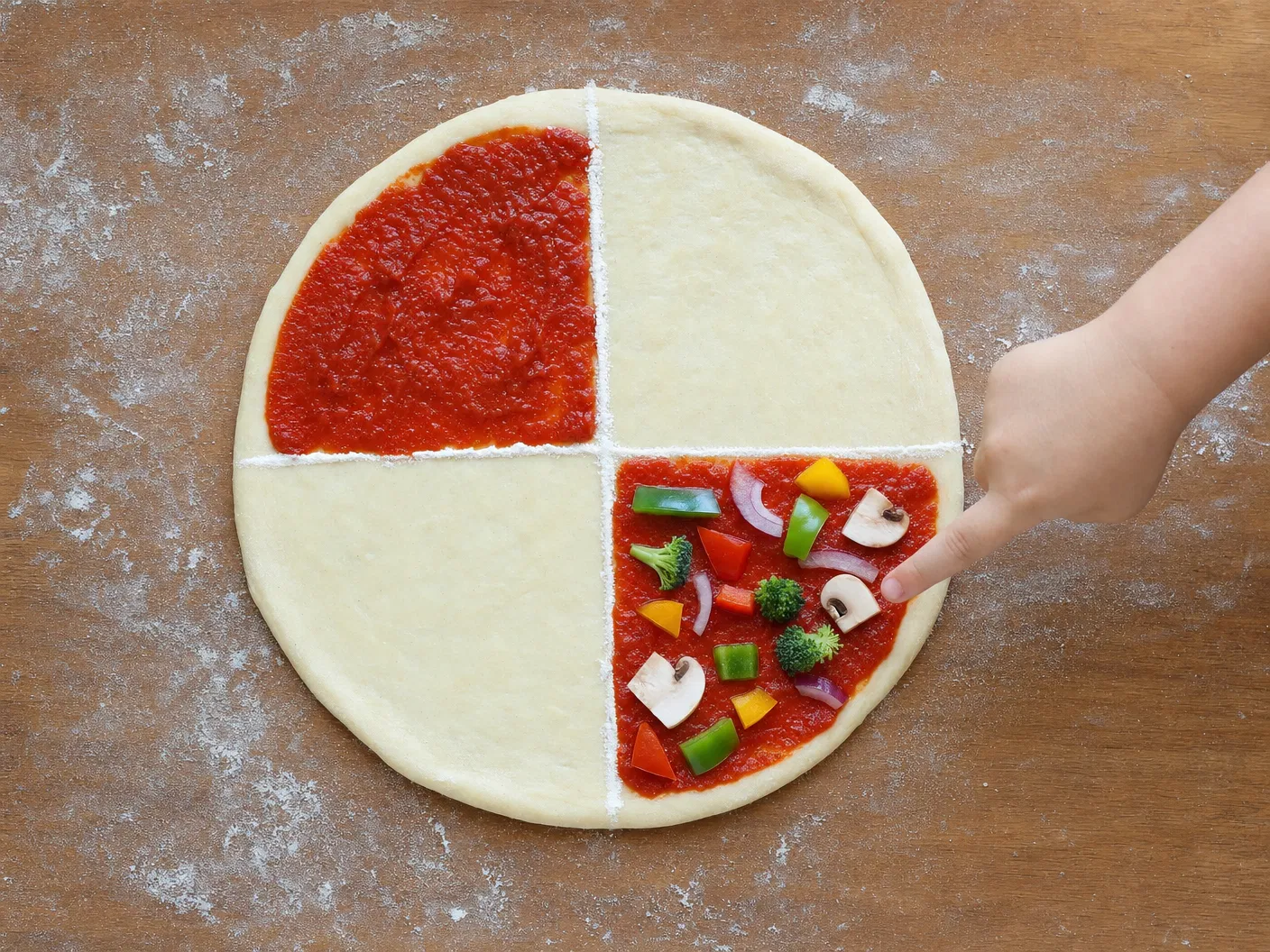
Students will partition a circular pizza form into two and four equal shares and identify each as one-half and one-quarter.
Students partition the pizza circle into equal shares and place toppings to demonstrate one-half and one-quarter — building part-whole reasoning with a concrete circular model.
Observing Physical Change
Students will describe observable physical properties of cheese and dough before and after heating and identify at least one change.
Students observe the staff-controlled oven process and record structured before-and-after observations of cheese and dough — connecting hands-on observation to physical science concepts.
Every Minute Is Structured
The class follows a written lesson plan. Each segment has a clear academic objective and produces a piece of student evidence.
Everything Is Documented
All four session documents are bundled into one PDF. Download the complete packet to review the lesson structure, student work format, and assessment criteria.
Real Tools. Real Instruction. Real Evidence.
Students Measure, Not Cook
Children use measuring cups and spoons to portion sauce, and a digital gram scale to weigh cheese. The academic task is measurement — reading numbers, comparing amounts, and recording results. Ruckus staff operate the ovens.
The Pizza Is the Manipulative
The circular pizza form is used to teach halves and quarters. Toppings are used for counting and comparison. These are the same concrete manipulatives used in any K–2 math classroom — they just happen to be real food.
Every Student Produces Evidence
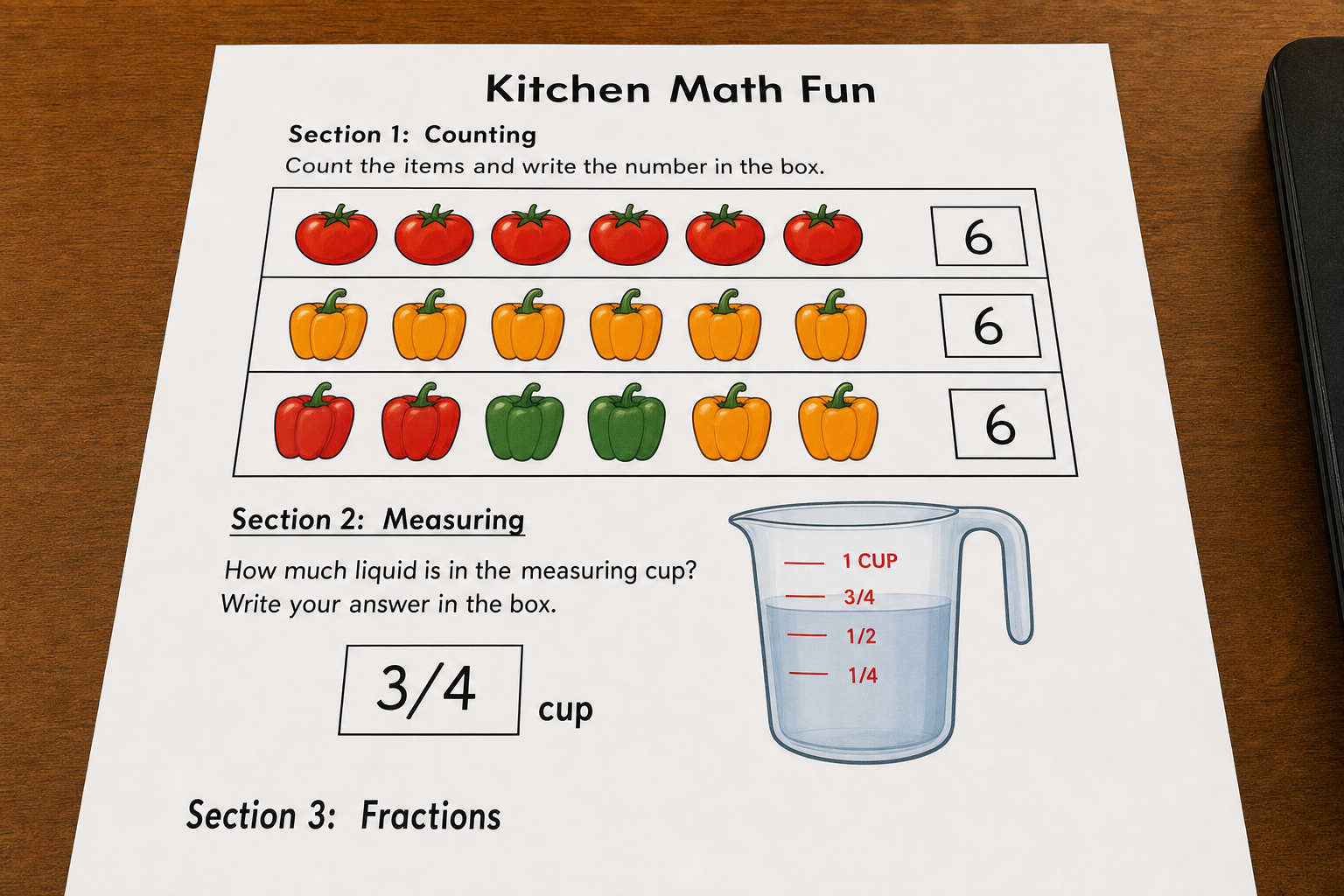
Each child completes a one-page math worksheet and a three-question exit ticket. The instructor completes a per-student checklist marking each skill as mastered or emerging. Parents receive a copy.
Real Restaurant Tools
Students work with the same measuring cups, digital gram scales, and kitchen tools used in a real working restaurant kitchen. These are not toy replicas — they are the actual instruments of measurement.
Ready to Register?
Sessions are available for children in Kindergarten through Grade 2. Contact us to schedule a session or ask about ESA+ eligibility for your child.